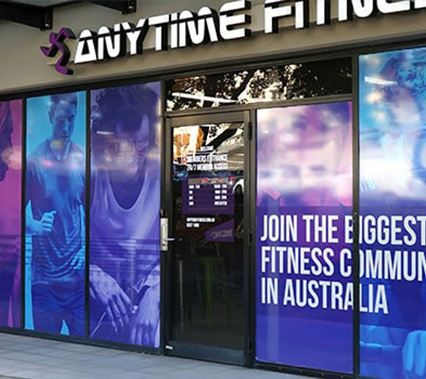
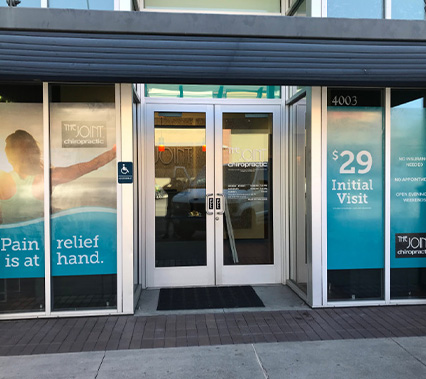
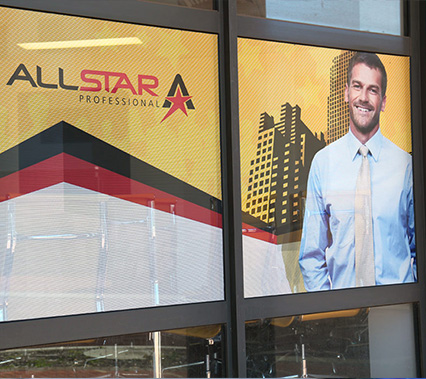
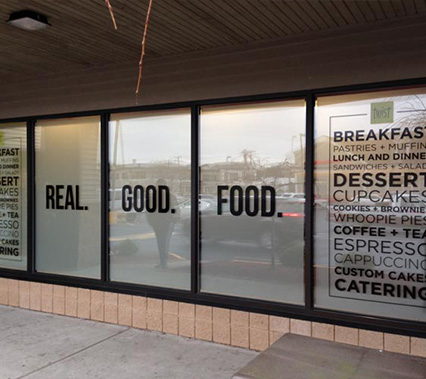
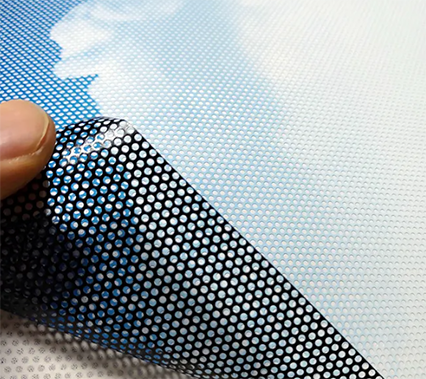
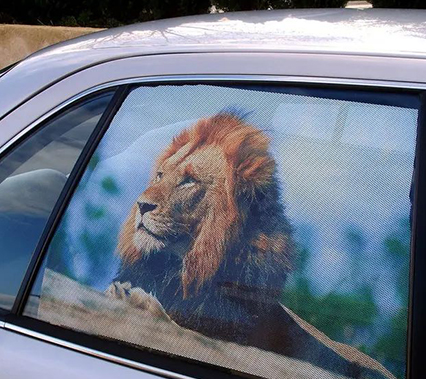
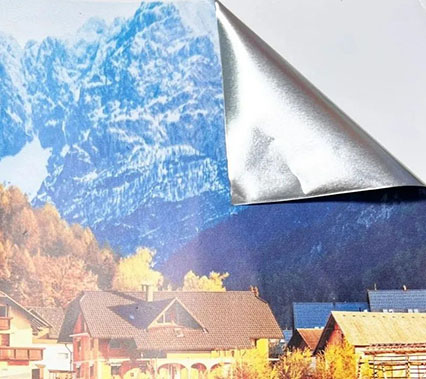
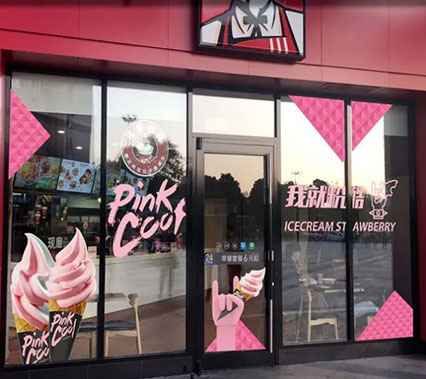
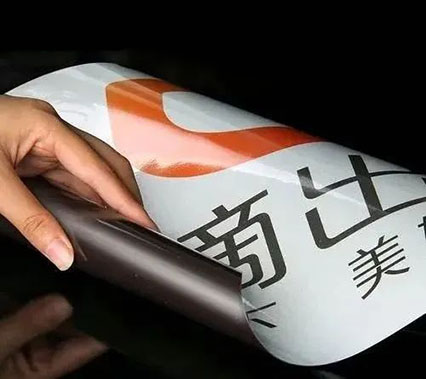
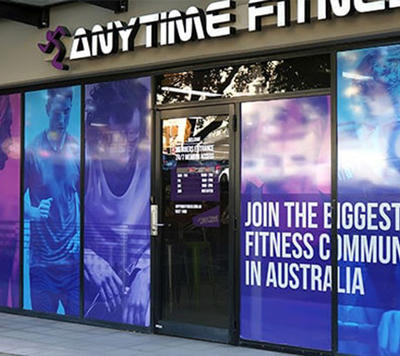
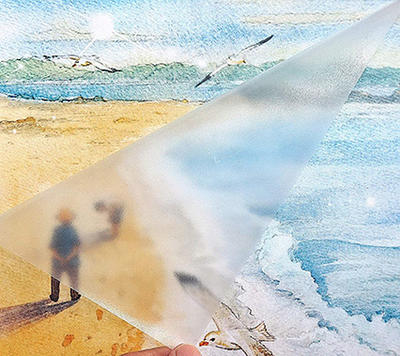
One Way Vision is a printable perforated self adhesive vinyl developed for digital printing on glass and window surfaces. The face film is formed by a pattern of micro perforations, which allows an image printed on the outer side to remain fully visible to passers by, while the inner side retains a semi transparent, screen like appearance that preserves outward visibility and natural light. This directional viewing effect positions perforated glass film as a distinct category within window graphics and glass stickers, offering a surface for advertising and branding that goes beyond conventional printed signage.
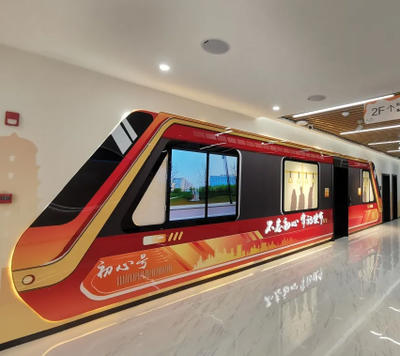
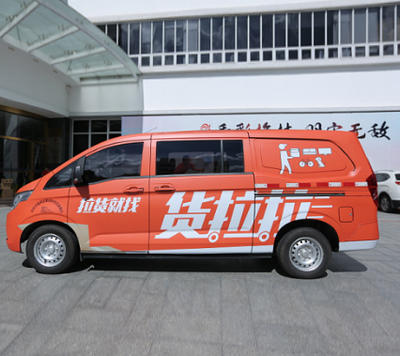
As a form of self adhesive vinyl wall covering and architectural film, One Way Vision is produced in several formulations to match different printing technologies, project durations, and performance requirements. Variants differ by face film thickness, liner weight, adhesive composition, and light transmittance ratio, ranging from economical short term promotional grades to premium UV compatible and extended durability options. The product family is commonly specified for vehicle wrap graphics, building wraps, point of purchase displays, retail and commercial window signage, and corporate identity installations, providing a consistent base material across a wide span of glass and window based applications.
Key Features of One Way Vision Perforated Glass Film
New Media Space
Turns existing glass surfaces into an additional advertising and branding surface without structural modification to the building or vehicle.
Privacy and Security
Limits the outside view into an interior space while the interior side keeps an outward view, supporting daytime privacy for storefronts and offices.
Print, Install, Remove
Compatible with standard wide format printing workflows and application methods used for other self adhesive vinyl and window graphics products.
Face Film, Liner and Adhesive Construction
Each roll consists of three functional layers: a perforated face film that receives the printed image, a release liner that protects the adhesive during storage and handling, and an adhesive layer bonded to the underside of the face film. Face film thickness and liner weight vary across the product range, and adhesive types are generally clear, with select variants, such as LED backlit compatible films, using an imported removable acrylic pressure sensitive adhesive. Hole size and the resulting transmittance ratio are calibrated together, since a larger open area increases outward visibility but reduces image density on the printed side.
Standard UV printable grades for digital UV curable ink systems
Conventional grades suited to solvent and eco solvent printing
Removable formulations for temporary campaigns and rebranding cycles
Specialty performance films, including flame retardant, glow in the dark, extended outdoor durability, and LED backlit variants
Multiple roll widths to match different printer formats and project scale
Installation and Maintenance Guidelines
Correct surface preparation and application technique have a direct effect on the final appearance and service life of the installed graphic.
Clean the glass surface thoroughly and allow it to dry before application
Apply within the recommended surface temperature range to support proper adhesive bonding
Position the film and apply from the center outward using a squeegee, releasing trapped air progressively
Align the perforation pattern evenly across the surface to maintain consistent transmittance
Trim excess material along the edges and inspect the perimeter for full adhesion
For ongoing maintenance, clean the installed surface with mild, non abrasive cleaning agents and soft applicators, and periodically inspect edges and corners for lifting. Removable variants are formulated to allow removal at the end of a campaign with reduced adhesive residue on properly prepared glass, though actual results depend on substrate condition and dwell time.
Application Scenarios and Surface Adaptability
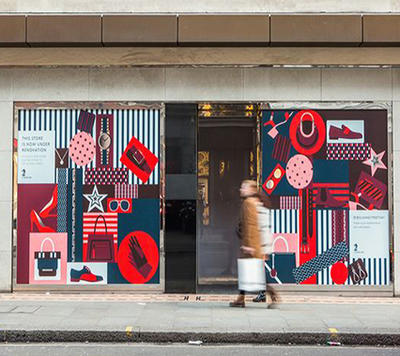
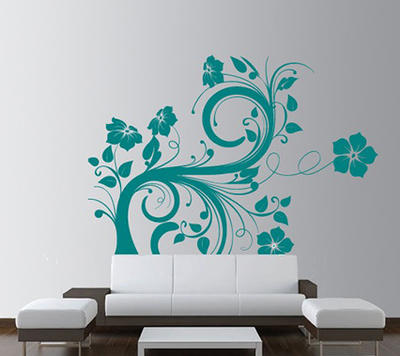
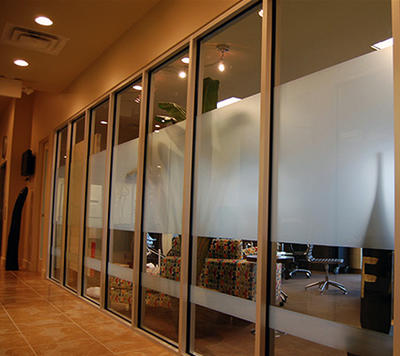
One Way Vision is applied across a range of glass and window based projects, including vehicle wrap graphics on rear and side windows, building wraps for construction hoardings and large facades, point of purchase displays, and retail and commercial window signage used for seasonal promotions or permanent corporate identity. Beyond exterior advertising, the same perforated glass concept extends to broader interior surface treatments, functioning in a similar role to self adhesive vinyl wall panels, interior films, and glass stickers used for office partitions, and to lighter weight contact paper style applications for smaller scale, short duration surface graphics.
How One Way Vision Compares with Other Window Graphic Media
Media Type
One Way Visibility
Typical Durability
Removability
Common Use
Perforated Window Film
Yes
Short to long term, grade dependent
Grade dependent
Vehicle and building wraps, window signage
Static Cling Film
No
Short term
Easily removable, no adhesive
Seasonal promotions, temporary displays
Frosted Vinyl Film
No
Medium to long term
Moderate
Privacy partitions, interior films
Contact Paper
No
Short term
Easy on smooth surfaces
Small scale DIY surface decoration
Note: Transmittance ratio, outdoor durability, and storage period differ by grade. Selection should be based on the intended installation duration, viewing distance, and printing method rather than a single specification alone.
Frequently Asked Questions
Q1: What is the difference between the printed side and the non printed side of One Way Vision?
The printed side displays the full graphic clearly, since the ink sits on the solid portion of the perforated face film. The non printed, inward facing side shows a finer, screen like pattern that allows a person on that side to see through toward the printed side while the image remains visually dominant from outside.
Q2: Can One Way Vision be applied to curved glass surfaces?
The material can generally be applied to surfaces with gentle curvature, such as vehicle windows, when installed with proper heat and squeegee technique. Sharper or compound curves may require additional care during application to avoid uneven perforation alignment.
Q3: How is light transmittance determined and why does it vary between products?
Transmittance is determined by the ratio of open hole area to solid face film area. Grades with a higher open area allow more light and outward visibility but reduce image clarity, while grades with a lower open area favor image density over transmittance, which is why different grades are offered for different application needs.
Q4: Is professional installation required?
Professional installation is not strictly required, but it is recommended for larger surfaces or projects where precise perforation alignment and a bubble free finish are important. Smaller panels can be applied by trained in house staff following standard application procedures.
Q5: How long does One Way Vision typically last outdoors?
Outdoor service life depends on the specific grade selected, with standard variants suited to shorter term campaigns and specialty extended durability variants intended for longer term installations. Actual performance is also affected by climate exposure, orientation, and surface preparation.
Q6: Can the film be removed without damaging the glass surface?
Removable grades are formulated to reduce adhesive residue when removed from properly prepared, sound glass surfaces. Removal ease also depends on installation duration and environmental exposure, so testing on a small area beforehand is advisable for older or less stable substrates.
How Architectural Window Films Solve Privacy, Light Control, and Branding at Once
Glass facades and storefronts create a constant tension between two goals that seem to pull in opposite directions: letting in daylight while keeping interiors shielded from outside view. architectural films address this tension directly, using layered adhesive constructions that manage light transmission, visual privacy, and surface protection without replacing the glass itself. For facility managers, glazing contractors, and sign shops, understanding how these films are engineered - rather than simply how they look - is what separates a durable installation from a short-lived one.
Understanding the Core Film Categories
Before comparing products, it helps to separate the film market into functional groups rather than marketing names. Most window films used on commercial glazing fall into one of three overlapping categories.
Solar control films - reduce infrared and UV transmission to lower cooling loads and limit fabric or furniture fading.
Privacy and decorative films - frosted, etched, or patterned surfaces that obscure sightlines while still passing light.
perforated glass films - printed micro-perforated vinyl that allows outward visibility from inside while displaying full-color graphics from outside.
These categories are not mutually exclusive. A single storefront project might combine a printed perforated panel at eye level with a plain solar control film above it, so the specification process usually starts with a room-by-room breakdown of what each surface actually needs to accomplish.
Why One Way Vision Film Works Differently From Standard Frosted or Tinted Options
One way vision film is often lumped in with generic tinted or frosted products, but its structure is fundamentally different. Rather than altering the transmissive properties of the entire surface, it relies on a pattern of small punched holes distributed across an opaque printed vinyl face. The open area ratio, typically somewhere between 40 and 70 percent depending on the product line, determines how much outward visibility remains for someone standing inside the glazed space.
40-70%Typical open area ratio
1-2 mmCommon perforation diameter
5-7 yrsTypical outdoor durability range
This construction produces an asymmetric viewing effect: from the brighter, outdoor side, the printed graphic dominates and the perforations become nearly invisible to the eye. From the dimmer, indoor side, occupants perceive the holes as a fine mesh rather than solid holes, which is why the material reads as semi-transparent from inside even though it appears fully opaque from outside. Because the perceived transparency depends heavily on the light differential between the two sides, results vary by time of day and interior lighting conditions, something worth flagging clearly during the specification stage rather than after installation.
Not every glazed surface benefits equally from a perforated film. The material performs best where a business needs a large branded surface but cannot sacrifice the daylight or sightlines that the glass was originally installed to provide.
Application
Primary Function
Placement Consideration
Retail storefront windows
Seasonal promotion graphics
Eye-level panels, removable without residue
Office partition glass
Visual privacy between workstations
Frosted base with logo overlay
Vehicle rear windows
Branding while preserving driver visibility
Requires flexible, conformable film grade
Stadium or arena glazing
Sponsorship and wayfinding displays
UV-stable inks for prolonged sun exposure
Ground-floor building lobbies
Security screening from street view
Full-height coverage with fire-rating check
A recurring pattern across these use cases is that the film is chosen specifically because tinted glass or interior blinds would block too much light, while a fully opaque banner would eliminate outward visibility entirely. The perforated format is a middle path, and that middle path is only worth the added product cost when both light and sightline actually matter to the occupant.
Selecting the Right Film for a Given Environment
Specification decisions typically hinge on four variables: orientation of the glass, interior lighting levels, expected viewing distance for the printed graphic, and required service life. The diagram below outlines a simplified selection sequence used by glazing contractors when narrowing down a film category before requesting samples.
On-site testing matters because printed samples viewed under showroom lighting rarely match how a film behaves against direct afternoon sun or artificial interior lighting after dark, when the visibility relationship between the two sides of the glass can reverse.
Installation and Maintenance Considerations
Film performance depends as much on installation quality as on the material itself. A handful of practical points come up repeatedly in field reports from installers working with perforated and privacy films.
Glass must be free of residual adhesive, mineral deposits, and coatings before application, since trapped debris telegraphs through as visible bubbles.
Ambient temperature during installation should generally stay within a moderate range, as adhesives applied in extreme cold or heat can cure unevenly.
Curved or textured glass requires a more flexible film grade; standard cast vinyl may not conform without visible stretching at the perforation points.
Exterior-facing printed films exposed to direct sun benefit from a laminate overlay to slow ink fading.
Routine cleaning should avoid ammonia-based glass cleaners, which can degrade the adhesive layer over time on some film chemistries.
Field data from commercial installers consistently shows that improper surface preparation, not film quality, is the leading cause of early film failure on glazed storefronts.
Comparing Film Types by Performance Attribute
The table below summarizes how the three main categories typically compare across attributes most relevant to a specification decision. Actual performance varies by manufacturer and product line, so figures should be treated as general ranges rather than fixed specifications.
Attribute
Solar Control
Frosted/Privacy
Perforated (One Way Vision)
Outward visibility
High
Low
Moderate
Branding capability
Minimal
Limited
High
Daylight transmission
Reduced
Moderate
Moderate to high
Typical service life
7-10 years
5-8 years
5-7 years
Removal difficulty
Low to moderate
Low
Low
Quick Reference Tags
For teams scanning specification sheets quickly, these condensed tags summarize where each film category typically fits.
Q1: Does perforated window film block all outside visibility during the day?
No. During daylight hours, occupants inside typically retain a workable degree of outward visibility through the perforation pattern, though clarity is reduced compared to unfiltered glass. Visibility tends to decrease at night when interior lighting is on and exterior light drops.
Q2: Can these films be applied to curved or textured glass surfaces?
Some grades can, but not all. Standard cast vinyl films may show stress marks on tight curves, so a more conformable, cast film is generally recommended for non-flat glazing.
Q3: How long does a typical architectural film installation last outdoors?
Most exterior-grade films are rated for roughly five to seven years under continuous sun exposure, though lifespan depends heavily on orientation, climate, and whether a protective laminate was applied over printed graphics.
Q4: Is removal likely to damage the underlying glass?
Properly formulated adhesive films are designed for clean removal without etching or staining glass, provided the correct temperature and technique are used during removal. Age and prolonged UV exposure can make some adhesives harder to lift cleanly.
Q5: Can one surface combine both privacy and branding functions?
Yes. It is common to specify a base frosted or perforated layer for privacy and layer printed graphics over sections of the same surface, provided the combined construction stays within the manufacturer's recommended total film thickness.

 English
 简体中文
简体中文