Polymeric Selections
The range is formulated with a low-shrinkage structure, so printed or cut graphics keep their original dimensions across a typical service life of 3 to 5 years, depending on installation conditions and exposure. A removable adhesive variant is included, developed so that graphics such as removable car decals and removable vinyl car decals can be taken down without leaving significant adhesive residue on the substrate. A consistent matte surface finish across the group reduces glare under direct light, which is relevant to car window lettering and other visibility-focused signage. The selection covers item numbers DPV4000G-DP, DPV4002G-DP, LTV08160G-DP, WP7400-DP, and CAR8002R, spanning general polymeric vinyl, container vinyl, wall vinyl, and vehicle wrapping film formats.
Related Information
| Item No. | Product Description | Specifications |
| DPV4000G-DP | Polymeric Vinyl | 100mic film+140g double PE liner |
| DPV4002G-DP | Polymeric Vinyl | 100mic film+140g double PE liner, Grey glue |
| LTV08160G-DP | Container Vinyl | 80mic film+160g double PE liner |
| WP7400-DP | Polymeric Wall Vinyl | 60mic film+140g double PE liner |
| CAR8002R | Car Wrapping Film | 60mic film+140g PE liner, removable grey glue |
Material Composition and Surface Characteristics of Polymeric Self Adhesive Vinyl
The polymeric film in this selection is produced from a polymer PVC base engineered for ductility and dimensional stability. This construction allows the material to stretch over curved or textured surfaces without excessive distortion of printed or cut graphics, which is a common requirement for self adhesive vinyl decals applied to vehicles and architectural surfaces.
Service life in the range of 3 to 5 years under normal outdoor exposure
Polymer PVC film construction with good ductility for non-flat surfaces
Dimensional stability with low shrinkage after installation
Matte surface finish for reduced glare and consistent visual presentation
Suitable base material for a wide range of surface applications
3-5 YEAR SERVICE LIFELow shrinkage film structure
Adhesion Technology and Removability for Vehicle and Wall Graphics
Two adhesive options are available within the selection. A grey glue formulation, used in DPV4002G-DP and CAR8002R, is developed to support removable applications such as removable car decals and vehicle wrap online projects, where graphics may need to be updated or taken down without damaging the underlying surface. The grey adhesive layer also assists with opacity control when the film is applied over surfaces with varied color or texture.
For projects where removal without significant residue is a requirement, the removable adhesive technology in this range is intended to allow graphics to be lifted cleanly from painted, laminated, or glass substrates, which is a common consideration for car window lettering and short to medium term commercial vehicle signs.
Weather Resistance and Outdoor Performance for Weatherproof Outdoor Signs
The polymeric film construction is oriented toward weatherproof outdoor signs, where the material is exposed to sunlight, temperature variation, and moisture over extended periods. The low-shrinkage property supports graphic stability on trailer decals and van decals and graphics that remain in service across multiple seasons.
The container vinyl option, LTV08160G-DP, uses a heavier 160g double PE liner construction suited to the handling requirements of container and trailer surfaces, while the general polymeric items are formatted for painted vehicle panels and similar substrates that require sustained outdoor exposure.
Application Range Across Commercial Vehicles, Trailers, and Wall Surfaces
This selection is applicable to a range of graphic and signage projects, including car advertising stickers, truck vehicle decals, and business truck decals used for company branding. The film supports die cut vinyl decals and custom truck door decals where precise cutting and clean edges are required, as well as company vehicle decals used across vehicle fleets.
Commercial vehicle signs and business truck decals for fleet branding
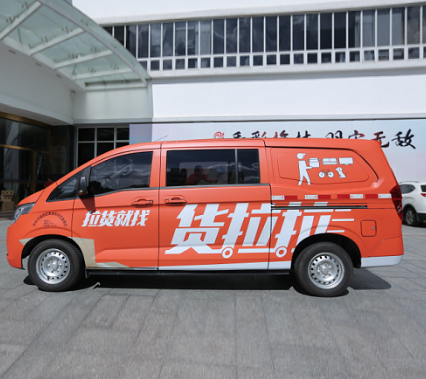
Trailer decals and van decals and graphics for logistics and transport vehicles
Die cut vinyl decals and custom truck door decals for detailed graphic layouts
Wall vinyl, WP7400-DP, for interior and exterior architectural surfaces
Container vinyl, LTV08160G-DP, for container and structural branding
Installation and Maintenance Guidance
Clean the target surface to remove dust, grease, and residue before application
Apply the film within a moderate ambient temperature range to support even adhesion
Use a squeegee to apply the film from center to edge, releasing trapped air as work proceeds
Allow the adhesive layer to set fully before exposing the surface to washing or heavy handling
Clean installed graphics with mild, non-abrasive methods to preserve the matte surface finish
Polymeric Vinyl Compared with Monomeric Vinyl Film
| Property | Polymeric Vinyl | Monomeric Vinyl |
|---|---|---|
| Typical service life | 3 to 5 years | 1 to 2 years |
| Flexibility for curved surfaces | Higher, suited to body panels | Lower, suited to flat surfaces |
| Dimensional stability | Higher, low shrinkage | Moderate, more prone to shrinkage |
| Common surface use | Vehicles, containers, textured walls | Flat signs and short-term graphics |
| Removable adhesive availability | Available within this range | Less commonly offered |
Frequently Asked Questions
Q1: What is the difference between polymeric and monomeric self adhesive vinyl?
Polymeric vinyl uses a calendered polymer PVC film that offers higher ductility and dimensional stability, making it suitable for curved or textured surfaces and longer service periods. Monomeric vinyl is generally more rigid and is better suited to flat surfaces and shorter-term applications.
Q2: Can this film be applied to curved or textured surfaces such as vehicle body panels?
Yes. The ductility of the polymer PVC film allows it to stretch and conform to moderate curves and textured surfaces, which supports use on vehicle body panels, rough walls, and container surfaces.
Q3: How long does polymeric self adhesive vinyl typically last outdoors?
Under normal outdoor exposure, the material is generally expected to perform for 3 to 5 years, with actual results depending on climate, surface preparation, and installation quality.
Q4: Does the removable adhesive leave residue when the film is taken off?
The removable adhesive technology used in select items, such as CAR8002R and DPV4002G-DP, is developed to allow removal without significant adhesive residue, though results can vary with substrate type and installation duration.
Q5: What surface preparation is required before applying vehicle wrap film?
The surface should be cleaned of dust, grease, wax, and other residue, and should be dry before application. Proper preparation supports even adhesion and reduces the likelihood of lifting at the edges.
Q6: Is this vinyl suitable for both cut lettering and printed graphics?
Yes. The film supports both die cut vinyl decals for lettering and shapes, and printed full-color graphics, making it applicable to car window lettering, business truck decals, and similar signage formats.
How to Match Commercial Vehicle Signs and Business Truck Decals to Real Fleet Operating Conditions
Why Vehicle Wrap Online Ordering Has Changed Fleet Purchasing
Fleet managers used to rely on a local sign shop for every reorder, which meant long lead times whenever a truck was repainted, a route changed, or a new depot needed matching graphics. Vehicle wrap online ordering shortened that cycle by letting a design team upload artwork, select a film family, and get a proof back within a day rather than a week. This shift matters most for operations running mixed fleets, where a single order might include panel vans, box trucks, and flatbed trailers that each need slightly different material behavior.
The material decision behind that order is not cosmetic. Fleet graphics sit outdoors year round, so the film has to resist UV fading, handle repeated washing, and stay adhered through temperature swings without lifting at the edges. Buyers researching options for polymeric selections are usually trying to solve exactly this problem: finding a film category that balances conformability over rivets and body lines with a service life that justifies the printing cost.
| Fleet Segment | Typical Graphic Type | Primary Performance Need |
|---|---|---|
| Panel vans | Full or partial wraps | Conformability over curves and door seams |
| Box trucks | Business truck decals | Flat panel adhesion and long dwell time |
| Trailers | Trailer decals | UV and abrasion resistance |
| Pool cars | Removable graphics | Clean removal without paint damage |
Comparing Film Families Used in Car Advertising Stickers and Fleet Graphics
Not every film performs the same way once it leaves the shop and gets applied to a moving vehicle. The comparison below groups the three film families most commonly specified for car advertising stickers and larger fleet work, based on how they behave in the field rather than how they look on a spec sheet.
| Film Family | Conformability | Typical Outdoor Life | Best Fit |
|---|---|---|---|
| Cast vinyl | High, handles rivets and curves | 5 to 7 years | Full wraps, complex body lines |
| Calendered vinyl | Moderate, flat panels only | 2 to 4 years | Short-term promotions, flat sides |
| Polymeric film | Good balance for mixed surfaces | 3 to 5 years | Cost-sensitive fleet rollouts |
Buyers often assume a longer rated life is always the right choice, but that is only true if the vehicle stays in service that long. A rental or leased fleet turning vehicles every three years gains little from a seven-year film and pays more per unit for durability it will never use.
How Van Decals and Graphics Move From Design File to Installed Wrap
A predictable production sequence is what keeps a multi-vehicle order consistent, especially when several trucks need to match exactly for a brand rollout. The stages below describe the typical path from artwork approval to a finished install.
Proof and color match against the fleet color reference so every vehicle prints identically.
Digital or screen print onto the selected film, sized to the actual vehicle template rather than a generic panel size.
Laminate application to add scratch and UV protection over the printed surface.
Plotter cutting and weeding to remove excess material and prepare individual panels.
Panel installation using heat guns and squeegees to conform the film around mirrors, handles, and body seams.
DesignProofPrintingLaminatingCutting andWeedingInstall
What Durability Data Tells Fleet Buyers About Trailer Decals and Company Vehicle Decals
Field data from fleet operators running large graphic programs consistently points to a few variables that matter more than the film brand itself: garage versus outdoor parking, average annual mileage, and wash frequency. The figures below reflect commonly reported ranges across fleet operations rather than any single supplier's testing.
18 to 24
months before visible fade on south or west facing panels parked outdoors
2x
faster edge lifting on vehicles washed with high pressure equipment weekly
30 percent
longer service life reported for garage stored versus outdoor stored units
For pool vehicles, loaner cars, or seasonal trailer campaigns, removable car decals solve a different problem entirely: they need to come off cleanly at end of term without stripping clear coat, which matters more than raw outdoor longevity for that use case.
Installation Variables That Determine How Long Graphics Actually Last
Two identical films can perform very differently depending on how they were installed. The most common failure points reported by fleet maintenance teams are listed below.
Surface temperature below the film manufacturer's minimum application range, which prevents full adhesive activation.
Skipped isopropyl alcohol wipe down before application, leaving road film or wax under the adhesive.
Insufficient heat during post heating on rivets, seams, and recessed door handles.
Rushed edge sealing on business truck decals applied to panels with sharp body lines.
Building a short installer checklist around these four points typically resolves the majority of premature lifting complaints reported on multi-vehicle rollouts.
Q1: How long should business truck decals last before reprinting is needed?
Most cast and polymeric films rated for outdoor use hold acceptable color and adhesion for three to five years, though vehicles parked outdoors in high UV regions often need review closer to the two and a half year mark.
Q2: Are removable car decals suitable for full wraps or only smaller graphics?
Removable films are generally engineered for lighter coverage such as logos, window graphics, or short-term promotional panels rather than full body wraps, since full coverage removal carries more risk to the underlying paint.
Q3: What is the main difference between cast and calendered vinyl for van decals and graphics?
Cast vinyl is thinner and more conformable, making it better suited to curved panels and rivets, while calendered vinyl is thicker, less flexible, and typically reserved for flat surfaces on a shorter timeline.
Q4: Can trailer decals be applied in cold weather?
Application below the film's minimum recommended surface temperature reduces adhesive tack, so most installers wait for panel surface temperature to reach at least the manufacturer's stated minimum, even if ambient air temperature seems acceptable.
Q5: Does ordering vehicle wrap online reduce quality compared to an in person shop visit?
Quality depends more on the proofing process and print calibration than on the ordering channel itself, provided the vendor supplies accurate vehicle templates and a color proof before production begins.
Product Inquiry
Share your requirements and our sales team will contact you within 1–2 business days