Monomeric Selections
Because production runs for monomeric vinyl are typically large, a wide range of configurations can be offered without significant cost increases. Film thickness generally spans from 70 micron up to 150 micron, liner weight and adhesive color can be adjusted to match the application, and both matte and gloss surface finishes are available. Functional variants such as a bubble-free liner for easier large-format application, a removable adhesive for residue-free removal, and a dual PE-coated liner for HP Latex printing compatibility broaden its use across vinyl die cut work, vinyl window lettering, car window ads, and other self adhesive vinyl decals projects.
Related Information
| Product Categories | Item No. | Product Description/Specifications |
| Premium Functional Vinyl | SGV003G-DP | High Gloss Vinyl |
| GTV002G | Premium White High Opaque Vinyl | |
| LEV002M | Backlit Vinyl | |
| SAV002TW | Frosted Vinyl | |
| DMV10142RG | Bus Sticker | |
| SNV0042 | Bubble Free Vinyl | |
| Practical Vinyl | SNV000 | 80um film+100gsm liner, clear glue |
| SCV001 | 80um film+120gsm liner, clear glue | |
| SNV002 | 100um film+140gsm liner, clear glue | |
| SCV003 | 80um film+140gsm liner, clear glue | |
| SNV004 | 100um film+140gsm bubble free liner, clear glue | |
| SCV006 | 100um film+140gsm liner, grey glue | |
| SNV007 | 80um film+120gsm liner, black glue | |
| SCV008 | 100um film+140gsm liner, black glue | |
| SNV0072 | 80um film+120gsm liner, grey glue | |
| Economical Vinyl | K07100 | 70um film+100gsm liner, clear glue |
| K08100 | 80um film+100gsm liner, clear glue | |
| K08120 | 80um film+120gsm liner, clear glue | |
| K08140 | 80um film+140gsm liner, clear glue | |
| K10140 | 100um film+140gsm liner, clear glue | |
| K10120 | 100um film+120gsm liner, clear glue |
Key Features of Monomeric Self-Adhesive Vinyl
Service Life: Approximately one to two years, suitable for short and medium term applications.
Pricing: Competitive cost structure supported by high volume production.
Surface Compatibility: Flat surfaces and applications with soft curves.
Ink Absorption: Consistent, high quality print output across common print methods.
Surface Finish: Available in both matte and gloss options.
Product Category Overview: Premium, Practical, and Economical Vinyl
| Category | Representative Items | Typical Applications |
|---|---|---|
| Premium Functional Vinyl | High Gloss, Premium White High Opaque, Backlit, Frosted, Bus Sticker, Bubble Free variants | Backlit business signs, glass door signage, bus magnets, large window clings |
| Practical Vinyl | Film and liner combinations from 80um to 100um, with clear, grey, or black glue options | Van decals, truck graphics designs, car door signs, storefront window signs |
| Economical Vinyl | 70um to 100um film with 100gsm to 140gsm liner, clear glue | Metal yard signs, storefront display, outdoor waterproof signs, printed menu boards |
Liner, Adhesive, and Thickness Customization
Liner options: standard liner, bubble-free liner for smoother large-format application, and dual PE-coated liner compatible with HP Latex printing.
Adhesive color: clear glue as the standard option, with grey or black glue available to reduce adhesive show-through on backlit or colored substrates.
Film thickness: generally ranging from 70 micron to 150 micron depending on category and liner weight, allowing selection based on durability and handling requirements.
Recommended Applications Across Signage and Vehicle Graphics
Vehicle graphics: removable car decals, car advertising stickers, custom vinyl truck decals, van decals, logos for trucks, car window lettering, vehicle logo placement.
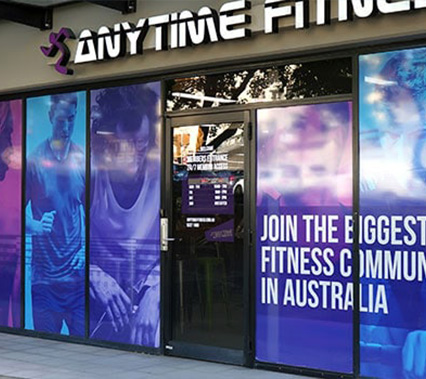
Retail and storefront: storefront window graphics, retail window signs, glass door signage, window graphics.
General signage: indoor sign for business, metal yard signs, printed menu boards, backlit business signs, outdoor waterproof signs.
Window applications: large window clings, rear window graphics, window lettering, with perforated window film as a related option when partial visibility is required.
Application and Handling Guidance
For large-format window graphics or rear window applications, a bubble-free liner is generally recommended to reduce trapped air during installation and to support a smoother finished surface.
Monomeric vinyl performs best on clean, flat, or gently curved surfaces such as painted walls, signage boards, and vehicle door panels. Where frequent replacement is expected, such as with temporary car stickers or seasonal storefront window signs, a removable adhesive variant helps avoid residue on the underlying surface after removal.
Monomeric Vinyl Compared With Other Common Self-Adhesive Film Types
| Film Type | Typical Durability | Surface Compatibility | Common Use Case |
|---|---|---|---|
| Monomeric Vinyl | 1 to 2 years | Flat, soft curve | Short to medium term signage and vehicle decals |
| Cast or Polymeric Vinyl | 5 years or more | Flat, deep curve, rivets | Long term vehicle wraps and permanent signage |
| Perforated Window Film | 1 to 2 years | Flat glass surfaces | One-way vision window ads and storefront window clings |
Q1: What is the expected service life of monomeric self-adhesive vinyl?
It generally lasts between one and two years, making it well suited to short and medium term applications such as temporary car stickers or seasonal storefront window graphics.
Q2: Can this vinyl be applied to curved vehicle surfaces?
It is designed for flat surfaces and applications with soft curves. Surfaces with deep curves or rivets are generally better suited to cast or polymeric vinyl due to its higher conformability.
Q3: What is the difference between clear, grey, and black adhesive?
Clear glue is the standard option for most applications. Grey and black glue are used to reduce adhesive show-through, which is particularly useful on backlit signs or colored and translucent substrates.
Q4: Is a bubble-free liner necessary for all applications?
It is not required for every project, but it is recommended for large window clings, rear window graphics, and other large-format installations where reducing trapped air improves the finished result.
Q5: Does this vinyl work with HP Latex printers?
A dual PE-coated liner option is available specifically to support compatibility with HP Latex printing systems.
Q6: How does monomeric vinyl compare to perforated window film for storefront use?
Both offer similar one to two year durability. Perforated window film is generally chosen when partial visibility through the glass is needed, while standard monomeric vinyl is used for fully opaque window graphics.
How Storefront Window Graphics Turn Retail Glass Into a Working Marketing Surface
Why Storefront Glass Deserves the Same Planning as a Storefront Sign
A store window is one of the few surfaces a retailer controls that faces the public around the clock, whether the doors are open or not. Unlike a printed banner or a temporary sidewalk sign, storefront window graphics sit directly in the sightline of foot traffic and passing vehicles, which means the material choice, the print quality, and the layout all carry more weight than they would on an interior poster.
Retailers frequently treat window space as an afterthought, applying whatever film happens to be on hand rather than matching the graphic to the application. A promotional decal meant to last two weeks and a permanent glass door signage package meant to last three years are fundamentally different jobs, and using the wrong film for either shortens its useful life, distorts the printed image, or leaves adhesive residue that is expensive to remove.
A window graphic is only as durable as the film substrate underneath it. Print quality can look identical on two different films the day they are installed, but the gap widens within weeks once UV exposure, temperature swings, and repeated cleaning start to act on the material.
Material Considerations: Choosing a Film Base for Window Applications
Vinyl films used for window vinyl and glass-mounted graphics fall broadly into two manufacturing categories, and the distinction matters more for glass than for almost any other substrate because glass does not flex, so any dimensional instability in the film shows up as bubbling, lifting at the edges, or visible shrink lines.
Monomeric Films
Monomeric vinyl is produced through a calendering process and uses smaller, lower-molecular-weight plasticizer molecules. It is generally more economical and easier to cut and weed, which makes it a common choice for flat or slightly curved glass where the application is short to medium term. Retailers producing seasonal promotions, sale announcements, or rotating campaign graphics often favor this category because the cost per square foot is lower and the turnaround from print to install is faster. A curated monomeric selections range typically covers gloss, matte, and one-way vision variants suited to exactly this kind of rotating storefront use.
Polymeric Films
Polymeric vinyl uses larger plasticizer molecules that are more resistant to migration, which gives the film better dimensional stability over time. It tolerates temperature cycling and UV exposure with less shrinkage, so it is generally the better fit for permanent or semi-permanent installations such as branded storefront lettering or architectural glass film that is expected to remain in place for years rather than weeks.
Choosing between the two is not simply a budget decision. A monomeric film stretched onto a compound-curved surface, or left in direct afternoon sun for an extended run, can shrink visibly at the seams within a single season. Matching the film category to the expected install duration and the glass geometry avoids that outcome before it happens.
What Film Characteristics Matter Most for Different Window Applications
The table below groups common storefront use cases against the film attributes that tend to determine success or failure in the field.
| Application | Typical duration | Recommended film type | Key attribute to prioritize |
|---|---|---|---|
| Seasonal sale or promo decal | 2 to 12 weeks | Monomeric | Fast weeding, low material cost |
| Rotating window ads campaign | 1 to 6 months | Monomeric with laminate | Clean removal without adhesive transfer |
| Branded storefront lettering | 1 to 3 years | Polymeric | Dimensional stability, UV resistance |
| One-way vision privacy film | 1 to 3 years | Polymeric perforated | Perforation ratio for daylight balance |
| Curved or compound glass surfaces | Any duration | Polymeric or cast | Conformability without shrink-back |
How to Design Retail Window Signs That Read at Both Walking and Driving Speed
Storefront graphics are almost always viewed from two very different distances: a pedestrian standing a few feet from the glass and a driver or cyclist passing at speed from thirty or more feet away. Designing for only one of these audiences tends to disappoint the other.
Keep the primary message to one short phrase or a single number, positioned in the upper two-thirds of the glass where sightlines from a vehicle are least obstructed by parked cars or planters.
Reserve dense information, such as hours, contact details, or a full product list, for the lower panel or the door itself, where a pedestrian standing close will actually read it.
Test contrast against both a daylight background and the interior lighting the store uses at night, since reflective glass can wash out low-contrast color pairings after dark.
Leave a visible unprinted margin around glass door signs for business use so the graphic does not interfere with door hardware, push plates, or code-required clear vision panels.
Common Layout Mistakes
The most frequent design error on storefront glass is centering all text vertically without accounting for interior displays or shelving that will sit directly behind the window. A headline that looks balanced on a blank glass mockup can end up overlapping a mannequin or a fixture once the store is merchandised. Reviewing the design against a photo of the actual window, not a flat rectangle, catches this before print.
What the Installation Workflow Looks Like From Measurement to Cure
Consistent results on storefront display glass come from following the same sequence every time rather than treating each job as one-off. The steps below outline the general workflow used across most flat-glass window graphic installations.
1. Surface preparationClean glass, remove residue and film2. Measure and trimConfirm panel size against actual glass3. Wet or dry applicationPosition film using chosen method4. Squeegee and bubble removalWork from center outward in overlapping passes5. Edge trim and cureTrim excess, allow adhesive set time
Application method depends on the film and the installer's preference. Dry application, applying the film directly without a slip solution, gives more control on smaller glass door signage pieces and reduces the risk of water intrusion at the adhesive layer. Wet application, using a soapy water solution to allow repositioning, is common on larger panels where the installer needs time to align the graphic before the adhesive grabs. Neither method is universally correct; the choice depends on panel size, ambient temperature, and installer experience.
Maintaining and Removing Window Graphics Without Damaging the Glass Beneath
Cleaning practices affect how long a storefront graphic stays presentable. Ammonia-based glass cleaners can accelerate breakdown of some adhesive formulations over repeated use, particularly around the edges where the cleaner pools. A mild, non-ammoniated solution applied with a soft cloth is generally safer for both monomeric and polymeric films, and it avoids introducing streaking that becomes more visible against a printed graphic than against bare glass.
Signs a Graphic Needs Replacement
| Visible condition | Likely cause | Recommended action |
|---|---|---|
| Edge lifting or curling | Adhesive aging past rated lifespan | Remove and replace before full detachment |
| Color fading or yellowing | UV exposure exceeding film rating | Reprint on a UV-stable polymeric base |
| Bubbling across the surface | Trapped moisture or poor initial squeegee work | Reinstall with wet method and vented film |
| Adhesive residue after removal | Film left in place beyond its designed removal window | Use a heat gun and adhesive remover, then re-clean glass |
Planning removal at the point of design, rather than treating it as an afterthought, is one of the more overlooked steps in a storefront window graphics program. Films intended for short-term display benefit from adhesive systems rated for clean removal, which spares the glass and the storefront frame from residue buildup that accumulates when a series of temporary campaigns is installed one over another without proper stripping in between.
Bringing Material, Design, and Installation Decisions Together
None of these three factors, film selection, layout, and installation technique, works well in isolation. A well-designed graphic printed on the wrong film will still shrink or fade ahead of schedule. A correctly chosen film applied without attention to bubble removal or trim will still look unfinished. Treating window graphics as a coordinated decision rather than three separate purchases tends to produce storefront displays that hold their appearance for the duration they were actually designed to last.
Film selection Layout planning Installation method Maintenance schedule
Frequently Asked Questions
Q1: How long does a typical storefront window graphic last before it needs replacing?
It depends heavily on film category and sun exposure. A monomeric graphic used for a seasonal promotion is usually designed for a few weeks to a few months, while a polymeric graphic used for permanent branding can hold its appearance for one to three years under normal outdoor conditions.
Q2: Can the same film be used on both flat storefront windows and curved glass doors?
Flat monomeric films can work well on flat glass but tend to shrink back at the edges when stretched over curves. Polymeric or cast films are the more reliable choice for compound curves because they hold their shape without relying on constant tension.
Q3: What is the difference between wet and dry application for window graphics?
Dry application places the film directly onto the glass without a slip solution, which suits smaller pieces where precise placement matters. Wet application uses a soapy water solution to allow repositioning during install, which is often preferred for larger panels that need extra alignment time.
Q4: Why do some window graphics leave residue when removed?
Residue typically results from a film left in place well beyond its rated removal window, or from an adhesive formulation not matched to the intended display duration. Selecting a film with a removal timeframe that matches the planned campaign length reduces this risk.
Q5: Does one-way vision film block all visibility from inside the store?
No, one-way vision film is perforated, so visibility from inside is reduced but not eliminated, while the printed side facing outward reads as a solid graphic. The ratio of perforation affects how much daylight and outward visibility remains for staff inside.
Product Inquiry
Share your requirements and our sales team will contact you within 1–2 business days