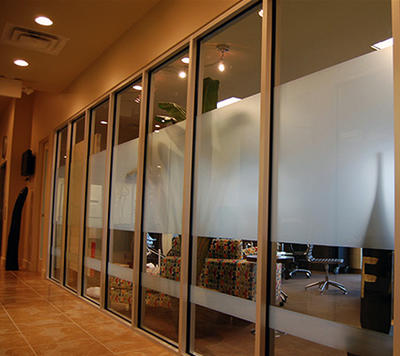
Walls resist forced entry. Doors have locks, frames, and reinforced hinges. Glass, by comparison, is often the single largest unprotected surface on a building envelope. A standard annealed pane can be broken in under ten seconds with a hand tool, and once that opening exists, every other security measure in the room becomes irrelevant.
A window film system changes this equation without replacing the glass itself. Instead of relying on the pane to resist impact on its own, the film adds a flexible, high-tensile layer that holds fragments together, slows penetration, and buys critical seconds during a break-in, storm, or blast event.
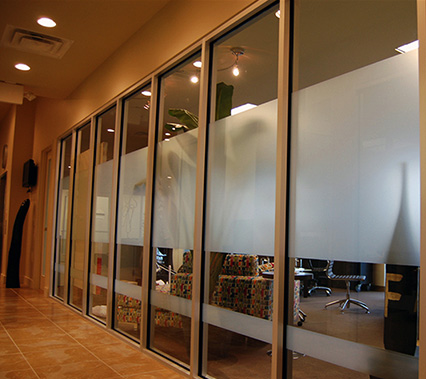
This article looks at how these systems actually perform under stress, what separates a basic safety film from a true security or ballistic-rated product, and how to match a film to a specific building risk profile.
Annealed and even most tempered glass is engineered for compressive strength, not for holding its shape after fracture. Once a crack initiates, it propagates through the pane almost instantly because there is nothing binding the fragments to a common surface. This is why a single hammer strike can clear an entire storefront pane in one motion.
Security film interrupts this failure pattern in three ways:
| Glass Condition | Typical Time to Create an Entry Opening | Fragment Behavior |
|---|---|---|
| Untreated annealed glass | Under 10 seconds | Falls in large, sharp shards |
| Tempered glass, untreated | 10 to 20 seconds | Fractures into small pebbles, no barrier remains |
| Standard safety film, 4 to 7 mil | 30 to 90 seconds | Fragments held to film, pane sags but resists full opening |
| Security-grade film, 8 to 15 mil with anchoring | 2 to 5 minutes or longer | Pane remains largely intact within the frame |
This delay window is the entire value proposition of security film. Most forced-entry attempts are opportunistic and time-sensitive; extending the breach time by even sixty seconds significantly reduces the likelihood of a completed intrusion, especially where alarm response or occupant reaction is part of the security plan.
Not all films described as protective serve the same purpose. Thickness, adhesive system, and anchoring method determine whether a product is a light safety film or a genuine security and ballistic mitigation layer.
4 to 7 mil polyester. Reduces cut and laceration risk from accidental breakage. Not intended to resist deliberate impact or forced entry.
8 to 15 mil, often multi-ply construction. Designed to resist repeated blunt and edged impact, delaying forced entry through storefronts, ground-floor windows, and public-facing glazing.
Heavier gauge, frequently paired with structural anchoring systems that attach the film to the frame rather than just the glass, addressing both projectile resistance and pressure-wave events.
Material selection also matters at the polymer level. Different polymeric selections affect tear resistance, elongation before failure, UV stability, and how the film behaves at low temperatures, which is particularly relevant for exterior glazing exposed to seasonal extremes.
The film itself is only half the system. Performance depends heavily on how the film is anchored to the surrounding frame, since an unanchored film can still be pushed out of the frame as a single sheet once the glass fractures.
This is why anchored systems, sometimes called wet-glazed or structural silicone attachment methods, are specified for higher-risk applications such as ground-floor retail, embassies, and government facilities. The anchoring converts the window into a single working unit where the frame, film, and glass share the load, rather than treating the film as a standalone barrier.
Products marketed for ballistic or blast mitigation are typically evaluated against recognized independent test protocols rather than manufacturer claims alone. Two of the most commonly referenced frameworks in North American specifications are forced-entry and ballistic-resistance standards from bodies such as ASTM and UL, and blast-hazard mitigation standards used in federal and military procurement.
| Application | Primary Risk Addressed | Typical Film Approach |
|---|---|---|
| Retail storefront | Smash-and-grab, prying | 8 to 12 mil security film, edge attachment |
| Bank or cash-handling counters | Forced entry, blunt impact | Multi-ply security film with reinforced perimeter |
| Government or embassy glazing | Ballistic fragmentation, blast overpressure | Heavy-gauge film with structural frame anchoring |
| Coastal or storm-prone buildings | Windborne debris impact | Security film rated for impact debris standards |
It is worth being clear about what film alone can and cannot do. No adhesive film converts standard glass into true bullet-resistant glazing on its own; that classification generally requires laminated or composite glass assemblies. What security and ballistic-rated film does reliably deliver is fragment retention and delayed penetration, which reduces injury risk from flying glass and slows an attacker even in a worst-case scenario.
Film performance depends as much on installation quality as on the material itself. A handful of factors consistently separate a system that performs as tested from one that underperforms in the field.
A film rated for a specific impact class in laboratory testing will only match that rating in the field if installation follows the same edge and anchoring specification used in the test assembly.
Maintenance requirements are relatively light. Cleaning should avoid ammonia-based products, which can degrade certain film adhesives over repeated use, and periodic inspection of edge seals is recommended in high-exposure climates.
Selecting a system starts with an honest assessment of what the glazing needs to resist, since over-specifying adds cost without added benefit, while under-specifying leaves the actual risk unaddressed.
As a general guide, buildings with high foot traffic and visible ground-floor glazing, such as retail storefronts, benefit most from security-grade films with reinforced edge attachment, since these locations are the most common targets for opportunistic break-ins. Facilities with elevated threat profiles, including government buildings or sites near blast-risk zones, typically warrant the heavier ballistic and blast-rated categories along with professional structural anchoring rather than adhesive-only installation.
Selecting the right base window films for a given climate and glazing type is a separate but related decision from the security rating itself, since UV exposure, temperature swings, and glass type all affect long-term film performance independent of impact resistance.
No. The glass can still fracture on impact. What the film does is hold the fragments together and resist full penetration, which significantly delays or prevents an intruder from creating an opening.
Yes, in most cases. Security film is applied directly to existing glazing, which makes it a practical retrofit option for buildings that cannot justify a full window replacement.
Most security films are rated for a service life of ten to fifteen years, though actual longevity depends on climate exposure, glass orientation, and adherence to recommended cleaning practices.
No. Ballistic-rated film improves fragment retention and slows penetration, but true bullet-resistant performance generally requires laminated or composite glazing assemblies rather than film alone.
Most security and safety films are optically clear or near-clear at standard viewing distances, though tinted and reflective options are also available depending on the building's aesthetic and solar control needs.
COPYRIGHT ©2018 Shanghai Hanker Industrial Co., Ltd., ALL RIGHTS RESERVED.

 English
 简体中文
简体中文