
 English
 简体中文
简体中文
High Density Grey Back PP Light-box Materials
Polypropylene synthetic paper with homogeneous grey pigmentation and density-modified structure for LED light-box diffusion panels.
Manufactured by Shanghai Hanker Industrial Co., Ltd.
Related DPI Products
Explore our comprehensive range of high-quality adhesive materials and digital printing media products from the DPI brand.
Best Seller
Best Seller
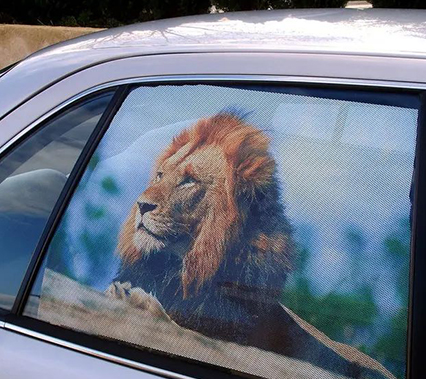
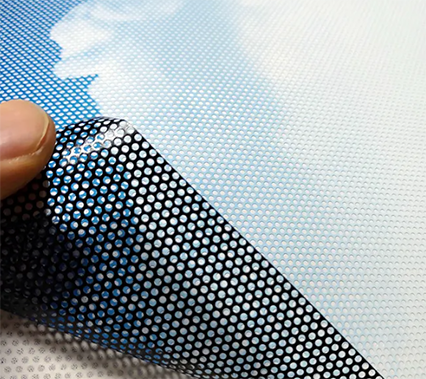
Economical&Practical One Way Vision
One Way Vision also known as perforated vinyl, see through s...
View DetailsBest Seller
Best Seller
Best Seller
Best Seller
Best Seller
Best Seller
Best Seller
Best Seller
Best Seller
Best Seller
Product Overview
High Density Grey Back PP Light-box Materials refers to a calender-processed polypropylene sheet incorporating mineral fillers and grey pigment throughout its cross-section. Unlike coated or laminated materials, the color is integral to the substrate, eliminating delamination risk during die-cutting, routing, or exposure to elevated temperatures within enclosed light-box housings. The material exhibits controlled light transmission, reducing hot spots from discrete LED point sources while maintaining surface uniformity.
The high-density structure provides stiffness exceeding standard polypropylene films of equivalent thickness, enabling unsupported spans in backlit displays. The grey backing serves dual functions: neutralization of LED color temperature variations and concealment of internal components such as wiring and mounting brackets when viewed through the diffusion face.
Base Polymer
Homopolymer Polypropylene + CaCO₃ filler
Density Range
1.05 g/cm³ - 1.25 g/cm³
Standard Gauges
0.3mm, 0.5mm, 0.8mm, 1.0mm
Light Transmission
18% - 35% @ 550nm (thickness dependent)
Product Parameters
Physical, optical, and mechanical parameters for grey-back polypropylene light-box media in rigid and semi-rigid formats.
Mechanical & Density
| Tensile Modulus (MD) | 1,800 - 2,400 MPa |
| Flexural Modulus | 1,500 - 2,000 MPa |
| Impact Strength (Drop Dart) | 0.8 J - 1.5 J |
| Rockwell Hardness | R85 - R95 |
Optical Characteristics
| Diffusion Factor | 75% - 85% (Haze) |
| Transmission Uniformity | ±5% across sheet |
| CIE L* (Back Face) | 55 - 65 |
| CIE a*/b* (Back Face) | -1.0 to 1.0 / -2.0 to 2.0 |
Thermal & Aging
| Heat Deflection Temperature (0.45MPa) | 105°C - 120°C |
| Vicat Softening Point | 145°C - 155°C |
| Thermal Expansion (23°C-60°C) | 8 x 10⁻⁵ mm/mm/°C |
| UV Resistance (QUV 1000h) | ΔE < 2.0 |
Note: Optical data measured with integrating sphere per ASTM D1003. Mechanical properties are directional (MD vs CD variance <10%).
About Shanghai Hanker Industrial Co., Ltd.
Shanghai Hanker Industrial Co., Ltd. is China High Density Grey Back PP Light-box Materials Manufacturers and Wholesale High Density Grey Back PP Light-box Materials Suppliers. With over 20 years of industry experience, we have grown into a fully-integrated enterprise capable of producing a complete range of products across the entire industrial chain.
2004-2005
Company Foundation
Shanghai Hanker Industrial Co., Ltd began preparations in 2004 and was officially registered and established in 2005. The DPI brand was founded in the same year, marking the beginning of our journey in the adhesive materials industry.
2012
Expansion of Production Base
To enhance the influence and market share of the DPI brand, we expanded our production base to Nanhuating Industrial Park in Fengxian District, Shanghai. The facility covers 25,000 square meters and employs over 160 people, equipped with modern production workshops and advanced equipment including silicone coating machines, laminating machines, and automated punching machines.
2016
New Manufacturing Facility in Jiangsu
We established Jiangsu DPI New Materials Co., Ltd. in Qidong, Jiangsu Province, covering 34,000 square meters. This facility is equipped with China's leading calendering machine, high-standard silicon coating machines, and PE coating machines, enabling independent production of raw materials like PVC calendering film and release paper.
Present
Industry Leadership and Innovation
Today, Hanker has developed into a fully-integrated enterprise with comprehensive capabilities across upstream, midstream, and downstream industrial chains. We hold over 65 invention and utility model patents, and our high-quality DPI products are sold to more than 80 countries worldwide.
Certifications & Quality Standards
National High-tech Enterprise
ISO9001 Quality Management
ISO14001 Environmental Management
Shanghai Contract-abiding Enterprise
Environmental Commitment
We actively uphold our environmental protection responsibilities by utilizing advanced RTO equipment, achieving a 99.9% waste gas treatment rate. We encourage full employee participation in environmental practices and support sustainable development through tangible actions.
Product Benefits
Performance characteristics specific to LED edge-lit and direct-lit backlighting systems.
LED Hot Spot Suppression
Bulk scattering from mineral fillers diffuses directional light, reducing luminance variance to <15% between adjacent LEDs.
Moisture Insensitivity
Zero water absorption eliminates dimensional change in outdoor or high-humidity installations.
Scratch Concealment
Through-color pigmentation renders surface abrasions less visible than painted or coated white materials.
Product Features
Structural and surface properties defined during extrusion and calendering stages.
- Integral Color: Pigment dispersed throughout thickness; no coating layer to abrade
- Dual-Surface Texture: Matte finish on viewing side, smooth finish on LED-facing side
- Die-Cuttable: Clean sheared edges without stress whitening
- Anti-Newton Ring: Slight surface texture prevents optical interference when mated to acrylic lens
- Flame Retardant Grade: UL94 V-2 and V-0 available with halogen-free additives
- Food Contact: Grades compliant with EU 10/2011 for refrigerated display cases
Product Applications
Specific usage cases in illuminated signage, display case lighting, and architectural backlighting.
Illuminated Poster Cases
Self-supporting back panels for 4mm-6mm light-boxes requiring even illumination behind paper posters.
- Airport Advertising: 1.0mm thickness for rigidity across 1200mm spans
- Retail Menu Boards: 0.5mm with edge-lit LED frames
Shelf Edge Labeling
ESL (Electronic Shelf Label) backers and light-guide panels for grocery illuminated channels.
- Refrigerated Sections: Condensation-resistant performance
Backlit Architectural Panels
Reception desk fascias and translucent wall cladding with rear LED wash lighting.
- Branded Environments: Grey backing provides corporate color consistency when unlit
Thickness vs. Light Transmission
| Nominal Thickness | Typical Transmission | Typical Application | LED Pitch Recommendation |
|---|---|---|---|
| 0.3mm | 32-35% | Thin edge-lit displays | < 20mm spacing |
| 0.5mm | 25-28% | Standard light-boxes | 20-30mm spacing |
| 0.8mm | 20-22% | High-uniformity requirements | 30-40mm spacing |
| 1.0mm | 18-20% | Structural applications | < 50mm spacing |
Fabrication Notes
Laser Cutting
CO₂ lasers (10.6µm) cut cleanly. Nitrogen assist gas reduces carbonization on cut edge.
Edge Sealing
Unsealed cut edges allow light piping; flame polish or solvent treatment recommended for visible edges.
Thermal Expansion
Allow 2mm/m clearance in frames for 40°C temperature rise during continuous LED operation.
Cleaning
Isopropyl alcohol (70%) or mild soap solution. Abrasive cleaners remove surface texture and increase gloss.
Frequently Asked Questions
Answers regarding material selection, environmental resistance, and processing methods for grey polypropylene media.
What is the difference between "Grey Back" PP and standard white PP with grey paint?
Grey Back PP is homogeneously pigmented throughout the sheet cross-section. Painted materials exhibit coating thickness variation at corners and risk delamination when routed or cut. Through-color materials maintain consistent appearance after fabrication.
How does this material perform with UV-cured inkjet printing?
The surface energy of PP is low (32-34 dynes/cm). Flame or corona treatment to >42 dynes/cm is required for UV ink adhesion. Pre-treated versions with integrated primer layers are available for direct printing.
Can this grade be thermoformed into curved light-box faces?
High-density PP exhibits limited draw ratios. Shallow forms (depth:width < 1:10) are achievable at 150°C-160°C. Deeper draws require special low-crystallinity grades; standard filler-loaded grades exhibit stress whitening at tight radii.
What is the maximum continuous operating temperature inside an LED cavity?
Continuous: 85°C ambient. Short-term peaks (≤ 100h cumulative): 100°C. Above 110°C, filler-polymer debonding initiates, increasing haze and reducing transmission stability.
Does the grey color shift over time with LED backlighting?
Carbon black and inorganic grey pigments are photolytically stable. However, the PP matrix may yellow slightly (Δb* +1 to +2) after 10,000h of continuous blue LED exposure. UV-stabilized grades reduce this shift.
Interested in DPI Color Cutting Vinyl?
As a direct manufacturer with over 20 years of experience, Shanghai Hanker Industrial offers competitive pricing, flexible order quantities, and comprehensive technical support for our DPI brand products.