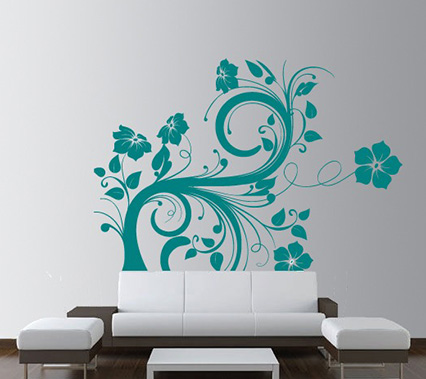
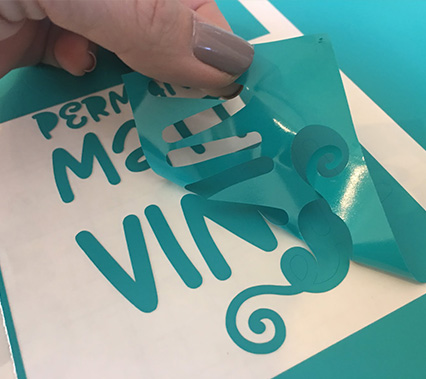
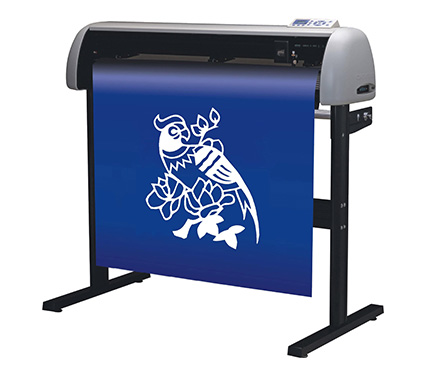
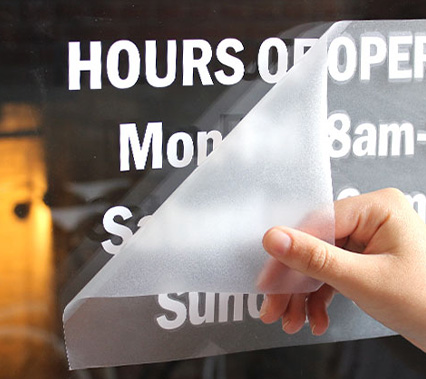
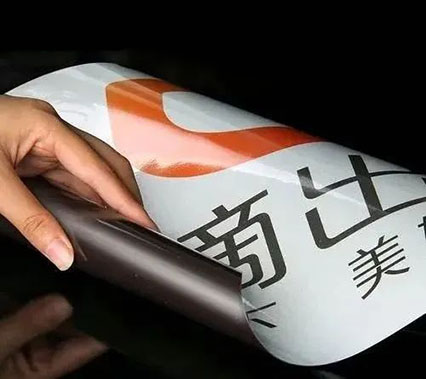
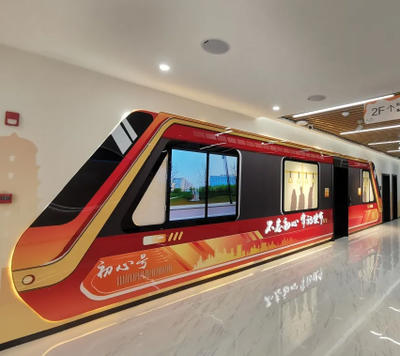
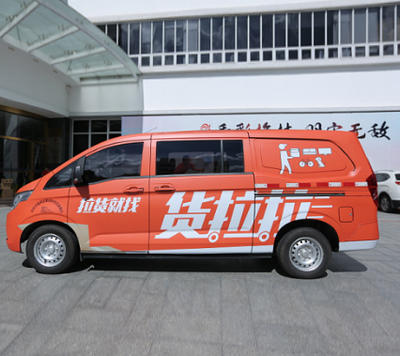
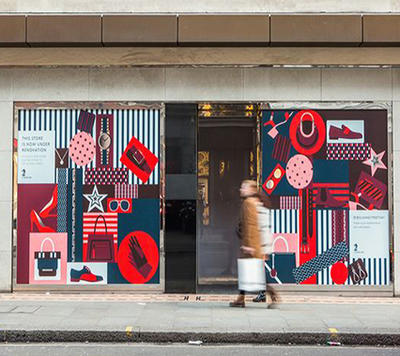
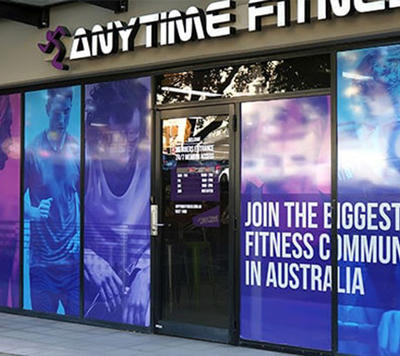
Color Cutting Vinyl is a self-adhesive PVC and metallized PET film engineered for precision sign-making, computer lettering and hand-cut graphic production. The range offers 55 colors across both gloss and matt finishes, giving sign shops and graphic converters a consistent base material for lettering, decals and cut-graphic work. Good dimensional stability keeps cut letters and shapes accurate during application, while a solvent-based clear permanent acrylic adhesive is formulated to bond with most rigid and semi-rigid substrates used in the sign industry.
The film is supplied in two working widths, 24 inch (610mm) and 48 inch (1,220mm), on standard 50 meter rolls, and is compatible with both plotter-based computer lettering and manual hand-lettering or die-cutting workflows. Beyond exterior and interior signage, including internally illuminated sign faces, the material is also specified for point-of-purchase displays, trade show graphics and vehicle graphic signs, positioning it within the broader family of self-adhesive decorative and architectural films used across sign, retail and interior graphic applications.
Size Stability Maintains dimensional accuracy after cutting and application, reducing shrinkage or edge lifting on finished graphics.
Finish and Color Range Available in gloss and matt finishes across 55 colors, covering standard, fluorescent and metallic PVC/PET options.
Adhesive System Solvent-based, clear permanent acrylic adhesive designed for compatibility with most rigid and semi-rigid substrates.
Roll Formats Supplied in 24 inch (610mm) and 48 inch (1,220mm) widths, standard 50 meter roll length.
Face Film, Liner and Adhesive Construction
The standard PVC series uses an 80um plus or minus 10um color PVC face film paired with a 120g to 140g liner paper, while the metallic series (gold, silver, brushed and champagne tones) uses a thinner 55um plus or minus 5um metallized PET film on a 120g liner. Across both constructions, the adhesive remains a solvent-based, clear permanent acrylic system, and rated service life and storage period are consistent at 12 months for all listed items.
Premium and Standard Color Cutting Vinyl: PVC face film, 120g to 140g liner paper
Fluorescent Color Cutting Vinyl: PVC face film, 120g liner paper
Gold, Brush Gold and Champagne PVC series: solid-color PVC face film
Metallized Gold, Silver and Champagne Gold/Red series: 55um metallized PET face film
Processing Methods and Application Techniques
The film supports two primary processing routes: computer lettering through plotter cutting for precise text and logo work, and hand-lettering or manual die-cutting for custom or one-off graphic shapes. For clean results, general vinyl application practice applies, including working at a moderate ambient temperature, applying even pressure from the center outward, and using heat where needed for wrapping corners or contoured edges.
How to apply adhesive vinyl: clean and dry the substrate, position the film, then squeegee from center to edge to remove air pockets
Best temperature to apply vinyl decal: a moderate, dry environment improves initial tack and reduces bubbling during application
Vinyl wrapping corners: mild heating softens the film for wrapping around edges and returns without cracking
Vinyl layering: overlapping cut pieces should be trimmed and sealed at the seam for a flush, durable finish
Remove glue from vinyl or wrap adhesive remover: residual adhesive on tools or surfaces can be cleared with a compatible adhesive remover before re-application
Typical Application Scenarios
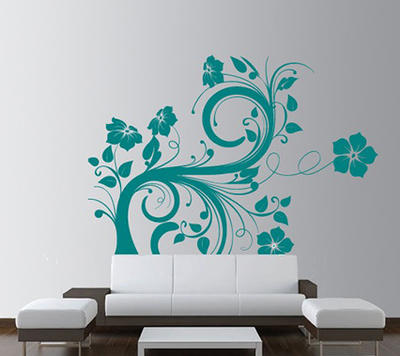
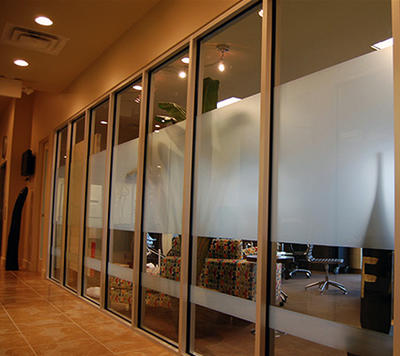
Color Cutting Vinyl is primarily used for exterior and interior graphics, particularly on internally illuminated sign faces, as well as point-of-purchase and trade show displays, and vehicle graphic signs. It sits within a wider category of self-adhesive decorative and architectural films that also includes surface-covering products used in interior renovation and furniture finishing, such as self adhesive vinyl wall covering, self adhesive vinyl wall panels, and wood grain contact paper for furniture.
Where a project requires large-area surface covering rather than cut lettering, related film categories are typically specified instead, including furniture contact paper, table sticker cover and table vinyl wrap for tabletops, vinyl wrap for cabinets and vinyl cabinet wrap for cover kitchen cabinets projects, counter top wrapping or wrapping countertops, kitchen island wrap around and door kitchen island or kitchen door wrapping applications, as well as wrap wardrobe and wardrobe renovation work. These decorative covering films are also common in larger interior fit-outs such as elevator interior renovation or an office refurbishment quote.
Color Cutting Vinyl Compared with Decorative Surface Films
Attribute
Color Cutting Vinyl
Decorative/Architectural Surface Films
Primary use
Cut lettering, sign graphics, vehicle graphics
Furniture, cabinet, wall and countertop covering
Typical face film
PVC or metallized PET, 55 to 80um
PVC, often with textured or wood grain finish, thick contact options
Adhesive type
Solvent-based clear permanent acrylic
Permanent or repositionable acrylic, substrate dependent
Common formats
24 inch and 48 inch rolls, 50 meter length
Roll widths vary by application, cabinet or panel size
Processing
Plotter cutting, hand-lettering, die-cutting
Sheet wrapping, panel lamination, edge wrapping
Storage and Handling
Rated service life and storage period are both 12 months from production when the film is kept in its original packaging, away from direct sunlight and excessive humidity, at moderate room temperature. Rolls should be stored upright to avoid deformation of the liner and face film.
Frequently Asked Questions
Q1: What colors and finishes are available in the Color Cutting Vinyl range?
The range includes 55 colors across gloss and matt finishes, along with standard PVC, fluorescent PVC and metallized PET options such as gold, silver, brushed and champagne tones.
Q2: Which processing methods are compatible with this film?
The film can be processed through computer lettering with a plotter cutter, or through hand-lettering and manual die-cutting for custom shapes and one-off graphics.
Q3: What substrates is the adhesive suitable for?
The solvent-based clear permanent acrylic adhesive is formulated for compatibility with most rigid and semi-rigid substrates typically used in sign and display construction.
Q4: How should the film be applied to avoid bubbling or lifting at edges?
Clean and dry the substrate first, position the film, then squeegee from the center outward. Applying at a moderate temperature and using light heat when wrapping corners helps the film conform without cracking.
Q5: Is Color Cutting Vinyl the same as decorative wall or furniture covering film?
No. Color Cutting Vinyl is designed for cut lettering and sign graphics, while decorative covering films such as those used for wall covering, cabinet wrap or furniture contact paper are designed for continuous surface application and use different film thicknesses and finishes.
Q6: What is the recommended storage period and service life?
Both the storage period and rated service life are 12 months, provided the rolls are kept upright in original packaging, away from direct sunlight and high humidity.
How Color Cutting Vinyl Transforms Architectural Surfaces and Furniture Renovation Projects
Surface renovation used to mean demolition, dust, and downtime. Today, a growing number of contractors, interior designers, and furniture refurbishers rely on color cutting vinyl to reshape walls, cabinetry, and tabletops without touching the underlying structure. This shift is not cosmetic novelty; it reflects measurable gains in labor cost, material waste, and project turnaround. The sections below walk through the material science, application logic, and performance data that make this category of film a practical renovation tool rather than a temporary patch.
Understanding the Material Science Behind Surface Renovation Films
At the core of every cutting vinyl roll is a calendered or cast PVC layer paired with a pressure sensitive adhesive and a release liner. The calendering process controls film thickness consistency, which directly affects how cleanly the material can be plotter cut into fine lettering, wood grain textures, or geometric patterns used in architectural films installations. Coarse or uneven films tear during cutting and lift at the edges after application, so thickness tolerance is one of the first specifications worth checking before a large order.
Adhesive chemistry matters just as much as the film itself. Removable acrylic adhesives are favored for rental properties and temporary retail displays, while permanent solvent based adhesives are chosen for furniture surfaces that face daily wear, moisture, and repeated cleaning. Manufacturers operating integrated production lines, from PVC calendering through silicone release coating, typically maintain tighter batch to batch consistency because raw materials are not sourced from multiple third parties with varying quality control.
Industry data from independent adhesive testing labs suggests that films produced on fully integrated coating lines show a peel strength variance of under 8 percent between production batches, compared with variance exceeding 20 percent in blended supply chains.
Why Facilities Choose Color Cutting Vinyl Over Traditional Refinishing Methods
Traditional refinishing routes such as repainting, veneer replacement, or laminate reinstallation all share the same drawback: they require the surface to be taken out of service. Vinyl film application, by contrast, is typically completed within hours and the surface can return to use once the adhesive has cured, usually within 24 to 48 hours depending on ambient temperature and humidity.
Renovation Method
Average Downtime
Material Waste
Design Flexibility
Repainting
3 to 5 days
Moderate, includes solvent runoff
Limited to solid colors and simple textures
Laminate Replacement
5 to 10 days
High, full panel removal
Fixed patterns, limited sizing options
Color Cutting Vinyl
Same day to 1 day
Low, offcuts only
Wide range including wood grain, matte, gloss, textured finishes
Beyond speed, the category covers a wide finish range. A single roll format can be die cut for signage lettering or applied edge to edge as self adhesive vinyl wall covering, giving facility managers one material source for several project types instead of ordering paint, laminate, and printed graphics separately.
Application Process: From Substrate Preparation to Final Finish
Film performance depends heavily on installation discipline. Skipping substrate preparation is the most common cause of premature lifting, bubbling, and adhesive failure reported by installers.
Clean the surface thoroughly and remove grease, wax, or silicone residue that blocks adhesive contact.
Sand glossy or non porous substrates lightly to improve mechanical adhesion.
Dry fit the film and mark reference lines before removing the release liner.
Apply the film using a felt edge squeegee, working from center outward to push air pockets toward the edges.
Heat form corners and curved sections with a heat gun set to a moderate, even temperature.
Trim excess material with a sharp blade and seal edges to prevent moisture ingress.
For furniture pieces, the same sequence applies at a smaller scale. A tabletop wrapped with table vinyl wrap requires extra attention at the edges, since tabletops see frequent contact with liquids and abrasive cleaning cloths compared with vertical wall surfaces.
Performance Data: Durability, Adhesion, and Weathering Benchmarks
Objective performance benchmarks help buyers compare film categories without relying on marketing claims. The figures below reflect typical ranges reported in independent film testing summaries and installer field surveys, and they vary depending on film thickness, adhesive type, and environmental exposure.
5 to 8 yearsTypical outdoor color retention before noticeable fading
90 percent plusAdhesion retention after standard humidity cycling tests
Under 0.2 mmTypical film thickness tolerance on calendered PVC
99 percentWaste gas capture rate on RTO equipped production lines
Facilities managing certified production, including ISO9001 quality management and ISO14001 environmental systems, generally publish batch testing records that installers can request before large orders. This documentation matters most on projects where decorative covering materials will be exposed to direct sunlight or frequent handwashing, since UV stability and adhesive resilience vary widely across film grades.
Choosing the Right Film for Furniture vs Architectural Applications
Not every roll of cutting vinyl performs equally well across every surface type. Matching film specification to application context reduces the risk of early failure and unnecessary reordering.
Application
Recommended Finish
Key Consideration
Interior Wall Panels
Matte or textured finish
Low sheen hides substrate imperfections
Cabinet and Furniture Fronts
Wood grain or solid gloss
Requires strong initial tack for vertical panels
Tabletops and Countertop Edges
Scratch resistant laminate style film
Needs higher abrasion resistance rating
Exterior Signage and Trim
UV stabilized cast film
Weathering resistance is the priority factor
Furniture refurbishers frequently reach for wood grain contact paper for furniture because it replicates natural texture at a fraction of the cost of veneer replacement, while architectural teams working on lobby or corridor renovations lean toward large format rolls designed as self adhesive vinyl wall panels that minimize visible seams across long runs.
Maintenance and Lifecycle Considerations
Film longevity depends on ongoing care as much as initial installation quality. A short maintenance routine extends usable life significantly:
Clean with a mild, non abrasive solution rather than solvent based cleaners that can soften adhesive edges.
Avoid prolonged direct heat contact on furniture surfaces to prevent softening or discoloration.
Inspect edges and seams every few months in high traffic areas, resealing any lifted corners promptly.
Reapply protective topcoat sealant on high abrasion surfaces such as tabletop edges if the manufacturer specification recommends it.
When properly maintained, cutting vinyl surfaces can match or exceed the service life of traditional refinishing methods while remaining far easier to update again in the future, since removal and reapplication does not require sanding down to a bare substrate in most cases.
Frequently Asked Questions
Q1: How long does color cutting vinyl typically last once installed?
Indoor applications commonly last 8 to 10 years with minimal fading, while outdoor exposed installations typically range from 5 to 8 years depending on sun exposure, film grade, and adhesive type.
Q2: Can this type of film be removed without damaging the underlying surface?
Removable adhesive grades are designed to peel off cleanly at room temperature, though permanent adhesive grades used for high wear furniture surfaces may leave residue that requires gentle solvent cleanup.
Q3: Is professional installation necessary, or can it be done without prior experience?
Small furniture pieces are manageable for a careful first time installer, but large wall panels and seamless architectural runs generally benefit from experienced installers who can manage air bubbles, seam alignment, and heat forming around corners.
Q4: Does the film perform well in humid or bathroom environments?
Films with strong moisture resistance ratings are suitable for humid environments, though proper edge sealing is essential to prevent moisture from working underneath the film at seams and cut edges.
Q5: How does film thickness affect the final appearance and durability?
Thicker films generally resist tearing and abrasion better, making them suitable for tabletops and high traffic furniture, while thinner films conform more easily around curves and are often preferred for detailed wall graphics.

 English
 简体中文
简体中文