What is the difference between flex and banner printing?
Flex vs Banner Printing: The Core Difference at a Glance
The main difference is the material: flex refers to a PVC-coated polyester fabric used as the printing substrate, while "banner printing" is a broader term describing the process of printing large-format graphics onto any banner material — which may or may not be flex. In short, all flex printing is banner printing, but not all banner printing uses flex material.
| Feature | Flex Printing | Banner Printing (General) |
| Material | PVC-coated polyester (flex) | Flex, vinyl, fabric, mesh, etc. |
| Print Method | Solvent / eco-solvent inkjet | Various (inkjet, UV, dye-sub) |
| Typical Use | Outdoor advertising, signage | Indoor & outdoor displays |
| Durability | 3–5 years outdoors | Varies by material |
| Cost | Low to moderate | Low to high |
What Is Flex Printing?
Flex printing uses a coated PVC-polyester composite sheet as the base. The surface accepts solvent-based or eco-solvent inks, producing vivid, weather-resistant graphics. It is the dominant format for large outdoor advertising in many regions because of its low cost per square meter and wide availability.
Two Main Types of Flex Material
- Frontlit flex – Printed on the front surface, lit from the front or used in daylight. Standard weight ranges from 440 gsm to 550 gsm.
- Backlit flex – Translucent material designed for light boxes. Ink sits on a thinner sheet (typically 300–400 gsm) so backlight passes through evenly.
Common print resolution for flex ranges from 720 dpi to 1440 dpi, sufficient for large-format viewing distances of 1 meter or more.
What Is Banner Printing?
Banner printing is the general process of producing large-format prints on any flexible substrate intended to be hung, stretched, or displayed. The substrate could be flex, mesh vinyl, polyester fabric, or laminated paper, depending on the application.
Common Banner Substrates Beyond Flex
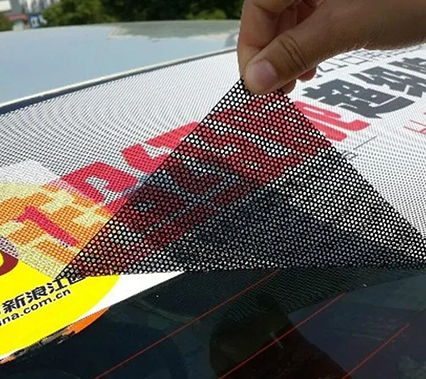
- Mesh vinyl – Perforated surface reduces wind load; used on scaffolding or building wraps.
- Polyester fabric – Lightweight, packable; popular for trade shows and indoor events.
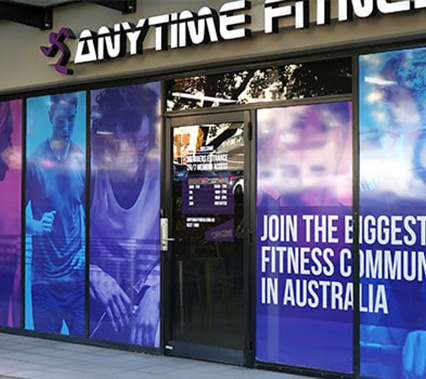
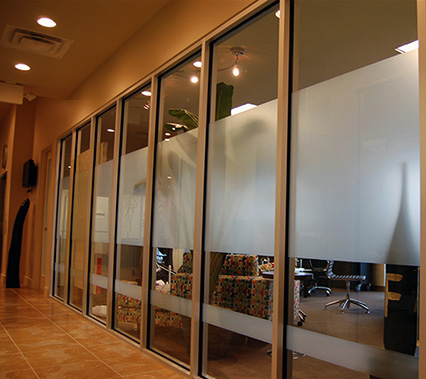
- Self-adhesive vinyl – Applied directly to walls or windows; not a hanging banner but often grouped under "banner printing" services.
- Paper-based substrates – Lower cost, indoor only, short lifespan.
Key Technical Differences Between the Two
Ink Compatibility
Flex material requires solvent or eco-solvent inks that bond with the PVC coating. Other banner substrates may use UV-curable inks, latex inks, or dye-sublimation, each delivering different color gamut and scratch resistance levels. Eco-solvent inks on flex typically offer outdoor durability of 2–3 years unlaminated, extending to 5+ years with lamination.
Finishing Options
- Flex banners are commonly hemmed and grommeted every 50 cm for hanging.
- Fabric banners may use pole pockets or silicone edge (SEG) frames.
- Mesh banners are often rope-finished on all four sides for tension installation.
Weight and Portability
A standard 440 gsm flex banner weighs approximately 440 grams per square meter. A comparable polyester fabric banner may weigh only 110–150 gsm, making fabric significantly more portable for repeated transport.
Printable Flex Banner: What You Need to Know Before Ordering
A printable flex banner is the most cost-effective solution for large outdoor displays, billboards, and promotional signage. Before placing an order, consider the following:
File Preparation Guidelines
- Supply artwork in CMYK color mode to avoid color shift when printing.
- Resolution: 72–150 dpi at final print size is standard for flex (viewing distance ≥ 1 m).
- Include a bleed of at least 50–100 mm on all sides for hemming and grommet placement.
- Accepted formats: PDF, AI, EPS, high-resolution TIFF or JPEG.
Choosing the Right Flex Grade
| Grade | Weight | Best For |
| Economy | 280–350 gsm | Short-term indoor events |
| Standard | 440–500 gsm | Outdoor signage, 6–18 months |
| Heavy Duty | 550–650 gsm | Permanent billboard, 3–5 years |
When to Choose Flex and When to Choose Another Banner Material
Choose Flex When:
- You need large-format outdoor signage on a tight budget.
- The display will be static and mounted for weeks to months.
- High weather resistance is required — UV, rain, and wind resistance are built in.
- Backlit display box graphics are needed (use backlit grade).
Choose Fabric or Mesh Banner When:
- The banner must be folded, packed, and reused at multiple events.
- Installation is on a high-rise or structure exposed to strong wind (use mesh).
- Premium color depth and a soft finish are priorities for an indoor trade show.
Frequently Asked Questions
Is flex the same as vinyl banner?
Not exactly. Flex is a PVC-coated polyester composite, while vinyl banner typically refers to a heavier, fully PVC sheet. Both are waterproof and used outdoors, but flex is generally lighter and lower cost.
What resolution should I use for flex banner printing?
72–150 dpi at the final print dimensions is standard. For close-viewing displays (under 1 m), use 150–200 dpi.
How long does a printed flex banner last outdoors?
2–3 years unlaminated with eco-solvent inks; up to 5 years with UV-protective lamination.
Can I print a flex banner at home?
No. Flex printing requires wide-format solvent or eco-solvent printers, which are industrial machines not available for home use. Use a professional print service.
What is the standard grommet spacing for flex banners?
Grommets are typically placed every 50 cm along hemmed edges, with one in each corner.
Is flex banner printing environmentally friendly?
Standard PVC flex is not biodegradable. Eco-solvent inks reduce harmful emissions compared to traditional solvent inks, and some recycled or PVC-free flex alternatives are available for environmentally conscious projects.